
The lowerer: the tool used to fight Ducati!

Premesso che holeshot e abbassatore dinamico non sono la stessa cosa, nessuno vuole sminuire uno strumento che ormai hanno in molti ma che Ducati ha evoluto in maniera molto vicina ai limiti del regolamento. Il tema è un altro. Holeshot e abbassatore dinamico sono solo strumenti di un contenzioso molto più ampio. E’ un modo per discutere Ducati perché sta creando altri “problemi” politici.

Questa storia dell’holeshot/abbassatore dinamico, ci sta sfuggendo di mano.
E non spiegherò tecnicismi già trattati perché non è questo il vero pomo della discordia.
Ok la stampa ci marcia perché non sembra vero che ci sia una novità tecnica di cui parlare, ma credetemi, non è rilevante.
E soprattutto non è la causa della guerra fra Ducati e le altre case, perché invece è solo lo strumento.

Diciamoci la verità, il motomondiale è un circus, nel senso che è proprio uno spettacolo itinerante che per sopravvivere deve cambiare equilibri e soddisfare requisiti politici e di mercato. Altrimenti non si correrebbe in posti assurdi come Rio Hondo e Mandalika. Non ci prendiamo in giro.
Il motomondiale fa questo per sopravvivere. Ok i protagonisti, anche prolungati come Rossi e Marquez, che però sono anomalie personali, ok gli antagonisti di successo come Lorenzo, ok gli underdog, ossia gli inaspettati come Mir in un’annata al 100% atipica, ma questo non è l’andamento normale. Non vi devo svegliare io in merito al fatto che molto spesso, guarda caso, le gare locali hanno come protagonisti i beniamini locali, oppure gli stessi title sponsor vedano vincere i loro piloti nei GP intitolati. Davvero è perché il tal pilota ha girato di più in quella pista oppure lo sponsor è venuto personalmente a incoraggiare il suo team nel GP ad esso intitolato?
Ma allora è tutto falso? Assolutamente no, ma ci sono delle esigenze da rispettare.
Ma allora le gare sono truccate? Assolutamente no. Ma spesso, e non è la prima volta, vengono create determinate condizioni. E questo succede tramite lo sviluppo degli pneumatici o alcune concessioni regolamentari.
E quando la creazione di determinate condizioni è troppo marcata, qualcuno si ribella. Ma anche questo fa parte del gioco. Perché tutti sanno che sono ribellioni rumorose ma che non vanno oltre il rendere pubblica una insoddisfazione che fa sembrare tutto più vero.
Ogni casa è lì per ottenere quello per cui ha pagato e lo sa.
E lo sa anche Dorna. I regali inaspettati e immeritati si contano sulla punta delle dita.

L’holeshot e l’abbassatore dinamico sono “fregni” che fanno andare più forte in un campionato in cui si va già troppo forte. Quindi non sono strettamente necessari.
Se andare veramente più forte come velocità di punta servisse a vincere, Ducati avrebbe vinto gli ultimi cinque campionati del mondo. E invece è andata diversamente perché è mancato qualcosa dal punto di vista umano. Non si vince senza moto ma non si vince senza pilota.

Però per Ducati è il momento di incassare e quindi la si lascia lavorare sui suoi punti forti. Due dei quali sono potenza e velocità di punta.
Ma non sono i soli. Ducati ha sempre avuto come punto di forza quello di allargarsi in griglia.
E quest’anno ha ripetuto il record delle otto moto.
Davvero pensate che siano l’holeshot e l’abbassatore a fare fastidio e non le otto moto in griglia?
Davvero qualcuno pensa che a dar fastidio di Ducati sia l’abbassatore e non il fatto che l’anno prossimo avrà otto moto in griglia e un’intera griglia di moto elettriche?
La verità è che privilegi simili li ha avuti anche KTM, che si è allargata con trofei, classi minori, vivai spaventosi, tre marchi diversi per finta, un dominio nelle classi junior e concessioni tecniche, il tutto ben innaffiato da Red Bull, che tramite sponsorizzazione controlla KTM e ha le mani su metà griglia piloti oltre che su metà della stampa europea. Tali privilegi però KTM non è riuscita a sfruttarli. Ha ottenuto meno di Ducati, spendendo però più del doppio. Ed è questo che brucia.
E Aprilia non ha avuto concessioni quando per anni è stata considerata un povero team privato nonostante fosse, di fatto, presente in forma ufficiale?
La verità è che dell’abbassatore in se non interessa a nessuno. E forse non lo ha nemmeno inventato Ducati, dato che Aprilia lo aveva già testato con Baiocco nel 2017 (chiedere a Piaggio) per poi mollare.
Avete letto bene. Matteo Baiocco.
E davvero pensate, senza nulla togliere a Ducati, che Honda e Yamaha non potrebbero sviluppare un loro abbassatore nel tempo libero, se veramente fosse la killer application per vincere le gare? E che Suzuki, che ha vinto un mondiale di fresco, si metta a protestare seriamente quando è già a posto per qualche anno?
Salvo assurdità esotiche di tipo personalistico (vedi ritorno di Marquez o passi falsi di Bagnaia &Co), Ducati è destinata a vincere il mondiale piloti. E’ da troppo tempo che aspetta, ci è andata vicino troppe volte e il fatto che non vi sia riuscita è solo un anomalia. Per cui l’abbassatore non c’entra.
Sono altre le cose che fanno incazzare e su cui si discute,
Però se volete parliamo di un “aggeggio” che abbassava la moto di dietro in partenza, e adesso anche davanti in qualunque momento, come se fosse quello da cui tutto dipende anche se, vedrete, in caso di vittoria Ducati, sarà la scusa per chi non accetta di perdere.


 

Dynamic lowering: the tool used to fight Ducati

Given that holeshot and dynamic lowering are not the same thing, nobody wants to belittle a tool that many now have but that Ducati has evolved very close to the limits of the regulation. The theme is another. Holeshot or dynamic lowering are just tools of a much larger litigation. It is a way to discuss Ducati because it is creating other political “problems”.

This holeshot/dynamic lowering thing is getting out of hand.
And I will not explain the technicalities already covered because this is not the real bone of contention.
Ok the press marches on us because it doesn’t seem true that there is a technical innovation to talk about, but believe me, it is not relevant.
And above all it is not the cause of the war between Ducati and the other manufacturers, because instead it is only the weapon.

Let’s face it, the world championship is a circus, in the sense that it is a traveling show that must change balance and satisfy political and market requirements in order to survive. Otherwise we wouldn’t be racing in absurd places like Rio Hondo and Mandalika. Let’s not fool ourselves.
The world championship does this to survive. Ok the protagonists, even prolonged ones like Rossi and Marquez, which however are personal anomalies, ok the successful antagonists like Lorenzo, ok the underdogs, unexpected ones like Mir in a 100% atypical season, but this is not the normal trend.
I don’t have to wake you up to the fact that very often, coincidentally, local riders win their homeraces, or the title sponsors themselves see their riders win in the titled GPs. Is it really because that rider has lapped more on that track or did the sponsor come personally to encourage his team in the GP named after him?
But is it all fixed then? Absolutely not, but there are needs to be respected.
So are the races rigged? Absolutely not. But often, and it is not the first time, certain conditions are created. And this happens through tire development or some regulatory concessions.
And when the creation of certain conditions is too strong, someone rebels. But that’s also part of the game. Because everyone knows that they are noisy rebellions but that they do not go beyond making public a dissatisfaction that makes everything seem more real.
Every factory is there for what it paid for and knows it.
And Dorna knows it too. Unexpected and undeserved gifts can be counted on the fingertips.

The holeshot/dynamic lowering is a “thing” that makes you go faster in a championship where you are already too fast. So it’s not strictly necessary.
If really going faster in top speed was “the factor”, Ducati would have won the last five world championships. But it went differently because something was missing from the human side.
You can’t win without a bike but you can’t win without a rider.

But it’s time for Ducati to cash in and so they let it work on its strong points. Two of which are power and top speed.
But they are not the only ones. Ducati has always had the strong point of expanding itself on the grid.
And this year he repeated the record of eight bikes.
Do you really think that it is the holeshot/dynamic lowering that is annoying and not the eight bikes on the grid?
Does anyone really think that it is the holeshot/dynamic lowering that bothers  and not the fact that next year Ducati will have eight bikes on the grid and an entire grid of electric bikes?
The truth is that KTM has also had similar privileges, which has expanded with trophies, minor classes, scary bunches of young talents, three different brands, a domination in the junior classes and technical concessions, all well watered by Red Bull, which through sponsorship controls KTM and has its hands on half the riders grid as well as half of the European press. However, KTM has not been able to exploit these privileges. He got less than Ducati, but spent more than double. And that’s what burns.
And can’t we say that Aprilia had no concessions when for years it was considered a poor private team despite being, in fact, present in an factory form?
The truth is that nobody really cares about the holeshot/dynamic lowering issue itself. And maybe Ducati didn’t even invent it, given that Aprilia had already tested it with Baiocco in 2017 (ask Piaggio) and then gave up. You read that right. Matteo Baiocco.
And do you really think, without taking anything away from Ducati, that Honda and Yamaha could not develop their own lowering device in their free time, if it was really the killer application to win races? And that Suzuki, who has recently won a world championship, will seriously protest when it is already ok for a few years?
Except for exotic personalistic absurdities (see Marquez’s return or Bagnaia & Co’s missteps), Ducati is destined to win the riders’ championship. It has been waiting for too long, it has come close too many times and the fact that it has not succeeded is just an anomaly. So the holeshot/dynamic lowering teme has nothing to do with it.
There are other things that piss off and cause controversies.
But if you want, let’s talk about a  “tool” that lowered the bike from behind at the start, and now also in front, anytime, as if it was the one on which everything depends even if, you will see, in case of victory, it will be the excuse for those who do not agree to lose.


MotoGp: What’s wrong with KTM?

There are money, sponsors and a super organization but the riders are fleeing KTM or are in pain. What happens inside the Austrian racing department?


I made you and I destroy you!
My mother could have easily worked in the KTM MotoGP team, since the attitude of the Austrians towards what they gave birth to, seems to be that of my mother when I combined a few and, in truth, even when I didn’t.
Making a brief history of cases of dissatisfaction there are a number of them.
Zarco started, and in unsuspecting times he wanted to give up an official saddle and a few million euros.
A salary he has NEVER seen since he now earns very little at Pramac. And it was also out of his bike without a Red Bull sponsor that publicly humiliated him. You will remember that Zarco, after announcing that the following year he did not want to race with KTM, was fired  in mid-season and deprived of his engagement and sponsors, and said things like: I hope they let me eat. What must have made him want to leave like this?
Pol Espargaro was no exception. Before going to Honda he complained quite a bit. Not to mention Fernandez, who led him to sign in MotoGP that he looked like a dog when they take him to the vet. He was even willing to spend another year in Moto2. An unprecedented thing: he was kicked in the ass to  MotoGP and he still complains. Not to mention Petrucci, direspected since the start, then held and fired too soon but sent to the Dakar as a sop, without conviction with a teams of which the rider from Terni publicly complained because he was not ready and made him risk his life. And then Lecuona.
Ok Lecuona was sacked but he said terrible things. Yet KTM is a cool place. Because it has a crazy “nursery” with initiatives and a phenomenal growth program that many, many, want to escape from. Like Acosta, who has already made him goodbye and told him that he, farewell, wants to leave as soon as possible. The record of anticipated self dismissal. Just like someone who is not well at home with his parents. A place where the managers are very strict, and highly paid, often much more than the riders, it seems a place where you have to do what they tell you, beyond company normality. That is, you have to do what they tell you even if you are perhaps right. What then is the sensitivity, if you do the races. That is to understand if the one you called to risk your life at 300kmh, can give you some advice, perhaps even apparently incomprehensible to you who will also be the owner of the hut but you are sitting in the garage. A very German attitude but without being completely German. Including the very tense relations with Ducati, which in recent years has spent a fifth, and cold to Aprilia, which has spent a tenth and which appears ever closer, too close to remain nice.
It is incredible the parable of KTM which has had incredible moments of growth, which can count on solid money, sponsors and riders, yet it seems to live in the least happy of all possible worlds, a world in which, alone, it creates and destroys itself. KTM started like a bomb but the Blitzkrieg, the flashy approach to quickly conquer the top, failed to work and, on the contrary, wore it out, making it a place to escape. Pedrosa is saved, in the mechanism, being him  no longer a rider but a tester and therefore has passed to the other side.
The arrival of Francesco Guidotti, who will be the Paolo Ciabatti of the Austrians, is perhaps due precisely to this need to soften the structure and bring that know-how that makes the mechanism work to others, who perhaps have less money, but that on certain others things are probably a little more resilient and receptive.
Will he succeed? Perhaps Guidotti has an operational strategy in mind that we do not see. After all, they called him. Otherwise they would have called me, but I’m still here, so…


MotoGp: Cosa c’è che non va in KTM?

Ci sono i soldi, gli sponsor e una super organizzazione ma i piloti fuggono da KTM o sono sofferenti.
Che succede all’interno del reparto corse austriaco?


Io ti ho fatto e io ti distruggo!
Mia madre avrebbe potuto lavorare tranquillamente nel team KTM MotoGP, dato che l’atteggiamento degli austriaci verso quello a cui hanno dato vita, sembra essere quello di mia madre quando ne combinavo qualcuna e, in verità, anche quando non lo facevo.
Facendo una breve cronistoria di casi di insoddisfazione ce ne sono un tot.
Ha iniziato Zarco, che in tempi non sospetti ha voluto mollare così, di botto, una sella ufficiale e alcuni milioni di euro.
Uno stipendio che non ha visto MAI più dato che adesso guadagna pochissimo in Pramac. Ed è stato anche a piedi senza sponsor Red Bull che lo ha pubblicamente umiliato. Ricorderete che Zarco, dopo aver annunciato che l’anno successivo non avrebbe voluto correre con KTM è stato appiedato a metà stagione e privato dell’ingaggio e degli sponsor, ed ha detto ai microfoni cose tipo: spero che mi lascino mangiare. Cosa deve averlo spinto a voler andar via così?
Pol Espargaro non è stato da meno. Prima di andare in Honda si è lamentato un bel po’. Per non parlare di Fernandez, che lo hanno portato a firmare in MotoGP che sembrava un cane quando lo portano dal veterinario. Era disposto a farsi addirittura un altro anno in Moto2. Una cosa senza precedenti.Lo hanno mandato in MotoGP a calci in culo e ancora si lamenta. Per non parlare di Petrucci, schifato sin dall’inizio, poi tenuto e silurato troppo presto ma mandato alla Dakar come contentino, senza convinzione con un team di cui il ternano si è pubblicamente lamentato perché non era pronto e gli ha fatto rischiare la vita. E poi Lecuona.
Ok Lecuona è stato segato ma ha detto cose terribili. Eppure KTM è un posto fighissimo. Perché ha un vivaio pazzesco con iniziative ed un programma di crescita fenomenale da cui però molti, moltissimi, vogliono scappare. Come Acosta, che gli ha già fatto marameo e gli ha detto che lui, ciaone, se ne vuole andare appena gli sarà possibile Il record delle dichiarazioni anticipate. Esattamente come uno che a casa con i suoi non sta bene. Un posto dove i manager sono severissimi, e pagatissimi, spesso molto più dei piloti, sembra un posto dove devi fare quello che ti dicono, oltre la normalità aziendale. Ossia devi fare quello che ti dicono anche se forse hai ragione tu. Che poi sta proprio lì la sensibilità, se fai le corse. Ovvero capire se quello che hai chiamato per rischiare la vita a 300kmh, può dare qualche dritta, magari anche apparentemente incomprensibile a te che sarai anche il padrone della baracca ma sei seduto al box. Un atteggiamento molto tedesco ma senza esserlo completamente. Inclusi i rapporti tesissimi con Ducati che negli ultimi anni ha speso un quinto, e di sufficienza verso Aprilia, che ha speso un decimo e che appare sempre più vicina, troppo vicina per rimanere simpatica.
E’ incredibile la parabola di KTM che ha avuto momenti di crescita incredibili, che può contare su denaro, sponsor e vivaio solidi, eppure sembra vivere nel meno felice dei mondi possibili, un mondo in cui, da sola, si crea e si distrugge. E’ partita a bomba KTM ma il Blitzkrieg, la guerra lampo per conquistare velocemente il vertice, non è riuscita a vincerla e, anzi, l’ha logorata rendendola un posto da cui fuggire. Si salva, nel meccanismo, Pedrosa, che ormai non è più un pilota, ma un tester e quindi è passato dall’altro lato.
L’arrivo di Francesco Guidotti, che sarà il Paolo Ciabatti degli austriaci, è forse dovuto proprio a questa necessità di ammorbidire la struttura e portare quel know how che fa funzionare il meccanismo agli altri, che forse hanno meno soldi, ma che su certe altre cose sono probabilmente un po’ più elastici e ricettivi.
Ci riuscirà? Forse Guidotti ha in mente una strategia operativa che noi non vediamo. Del resto hanno chiamato lui. Altrimenti avrebbero chiamato me, che invece sono ancora qua.


What happens to the old MotoGP REALLY? But really eh!

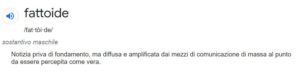
Factoid

Every once in a while talking to some reader or some colleague, some cliché comes up, which is either partly true but not 100% true or, as in this case, more of a factoid than a fact.

factoid

What really happens to the MotoGP of years past?

There are differences, someone will say, who knows, in the sense that while Japanese motorcycles at the end of their life are pressed and have a shorter life cycle, in the case of Ducati there is really a rental system at various round-trip levels that puts the material back into circulation and there are various circulating evolutionary steps. In short, the bikes last a while and then-and then...and then....
Actually, if you have also heard the story about Japanese motorcycles being pressed, know that it is an urban legend.
It's been done publicly on a couple of occasions just to stop certain trades and say, if you find it out there, know it's fake because we press them. Do you see that we press it? We press a couple of them on a couple of occasions.
Of course you know how our press does investigations, and having seen that they pressed one, they thought that it always happens that way, and the Japanese like to believe that. And the press is pleased to please.
But know, that this is not the case. Jap motorcycles are made to disappear. In the sense that they have a shorter life cycle and then they end up in certified places like some official museums of the houses, some important factories like the Honda plant in Atessa and things like that. So you understand from you that if there are some of them in some places, obviously they are not pressed. At most they are withdrawn. But so if you find a Japanese gp bike for sale, then maybe it's real? 99.9% no.

If you notice, even official Japanese motorcycles are there, but the ones that are there date back to the mid-1980s at most. Then there was a stop. Because of course there was an exaggerated trade as with the relics of saints, and collectors are often the victims of pricks. The entanglements we did in Italy and nord Europe with motogp and others, tarred, especially some special parts, remain in the "annals" of collecting.
I mean, no one presses millions of euros, quiet though you can't even find them around, these bikes. They just don't show you where they put them. Rightly so.

Listen to the podcast or watch the video!


How much do MotoGP cost? Who pays for them? What is included in the price?

MotoGP Bikes

Everyone talks about budgets, money to make MotoGP and the "cost" differences between different bikes.
But how does the mechanism work, in MotoGP? How much do the bikes cost?
How are they bought, rented, and most importantly, who pays for them to whom?
It works like this.
The bikes, of course, are built by the manufacturers and deployed on the track in the factory team and then given to the customer teams.

I used the term concede and it is not a random term. The bikes are not sold.
But how do the teams pay for them?
Actually, the teams do not pay for them, rather they are "provided" by a sugar daddy who makes a dedicated contribution on their behalf.
All teams that field bikes on the track, receive a contribution from Dorna, and in the case of customer teams it happens without seeing any money. This is because the contract, although there are the guarantees of the teams with various levels of access to more or less up-to-date material, is between Dorna and the houses. It is Dorna that guarantees so that the houses get the money, and to make that happen, the teams only see the money go through according to the supply contract.

The contribution, for both customer and private teams, is five million euros, for two bikes for which the bikes are almost always all paid for and sometimes even a little something left over.

A house, let's take an example, Yamaha, that fields a customer team, then receives another three million.
So the amount that Yamaha, but also KTM receives is five million to the factory team, five million to the customer team, and another three million to the house that fields a customer team.
But so does Ducati, which fields four teams receive thirty-two million?
No. Each Ducati team receives five million plus three million for a private team. This contribution is paid only once beyond the number of private teams fielded.

But how much are the bikes actually worth, or rather what is their price?
It depends. The houses in the motorcycle package also include services such as the track engineer and the electronic and other engineers whose value is high anyway, since we are talking about so many races plus so many tests and the man days of these engineers are not cheap. These packages are there in standard, reduced or extended versions. So Dorna 's counter buto provides, in addition to the bike, a certain number of spare parts and technical personnel.

So on the one hand, those who race Ducati have slightly higher costs while on the other hand, in the case of Japanese motorcycles, they might have something left over. It could, because the houses try to go as far as charging for services until the budget is closed, this is to make the most of the subsidy given. Often of goes well beyond that.

Can it be skimmed?
That is another matter. Here is a legend that says Razali last year thought the bikes cost 8 million and therefore had to allocate more money, which then generated some scazzo son the other managerial figure on his team when he found out that instead the price was a little more than half. But that is another story....


Poll: Where would you like Quartararo?

Quartararo

Fabio Quartararo, così dicono le voci, è tentato di lasciare Yamaha.
Dove lo vedreste meglio? Dove lo vorreste?

Misterhelmet e Genesio Bevilacqua che la tocca piano su MotoGP, SBK, SS e Petrucci!

Misterhelmet&Genesio

Avrebbe dovuto essere una call invece Genesio Bevilacqua mi ha calamitato a Moto dei Miti per  rilasciare un’intervista in cui non si è tirato indietro.
Analizza MotoGP, Superbike, ruolo dei team factory e privati oltre che di Dorna e Federazioni.
Ci sono le idee maturate in 30 anni di corse e anche qualche proposta.
La Supersport è un tipo particolare di futuro e su Petrucci ha un’idea controcorrente.

Disponibile in Video e Podcast. Scegliete voi!


Danilo Petrucci ha rotto il ca**o due volte. Ecco perché!

Danilo ha rotto!

Petrucci ha rotto il cazzo. Due volte.
Ve lo dico. In due modi ed in tutti i sensi.
Il primo è che deve averlo rotto davvero, altrimenti certe cose non si spiegano.
Alcune sue uscite alla Dakar, ormai troppe, iniziano ad essere viziate da problemi tecnici e intoppi che sinceramente potrebbero essere evitati.
Piccole disattenzioni meccaniche, quasti da mille lire, insomma roba che una casa ufficiale, in una competizione ufficiale, non si può permettere.
Con l’aggiunta che un conto è correre in pista, dove se ti succede qualcosa cadi “in sicurezza” e poi ti accompagnano al box con lo scooter, un conto è cadere nel deserto. Se la moto si ammutolisce per una piccolezza mentre stai cercando di superare un ostacolo e batti la capoccia su una pietra, rischi di rimanere lì fino a che l’elicottero ti viene a pescare. Con calma…
E non credo si debba aggiungere altro.
La verità è che senza gridare al complottismo, la sensazione è che qualcuno abbia misurato male la partecipazione di Danilo alla Dakar.
Gli toccava, era la riparazione di un torto subito, lo portiamo, tanto cosa vuoi che combini… insomma andiamo morbidi. Con la gente morbida e l’impegno morbido.
E invece questo ha dato lezione ai top rider… si può dire? Umiliandoli.
Non dico che KTM stia punendo Petrux perché va troppo forte, ma di sicuro qualche domanda sugli specialisti se la fa, se un newcomer arriva e li mette dietro. Quindi insomma non è bello se a Petrux capitano delle cose, sia chiaro, però meglio a lui che ad altri. Anche perché quello che doveva dimostrare lo ha dimostrato. E quindi, dai, let’s take it easy.
Dal punto di vista racing, KTM assomiglia un po’ a BMW. Piuttosto che ammettere, dover spiegare… insomma ci siamo capiti.
E questa cosa qui, mi sa che non la penso solo io, se Petrucci lamenta apertamente una certa leggerezza da parte dei meccanici, chiedendosi come mai fra tutte le KTM si rompe solo la sua. Quella sensazione di essere non troppo gradito, un po’ estraneo al meccanismo… voi vi ci siete mai trovati?

E comunque Danilo ha rotto il cazzo due volte.
Primo, lo ha rotto KTM, andando più forte di quello che dovrebbe fare uno a cui viene regalato un biglietto per la Dakar.
Secondo, perché lamentandosi così non fa una cosa furba. Presta il fianco alle critiche di lamentosità, e di ricerca delle scuse di quello che insomma non è mai colpa sua se non va.

Ma dopo queste rotture, chiudiamo con una solida ma triste certezza.
Il fatto che da anni Danilo debba vivere un ciclo che si ripete all’infinito. Essere sottovalutato, poi criticato, poi dimostrare che vale, poi subire nonostante tutto, lamentarsi e via daccapo.
A noi la mattina tocca alzarci, a lui tocca risorgere…

Guarda il video e ascolta il podcast!


https://www.spreaker.com/user/4555095/petrucci-ha-rotto


Danilo Petrucci alla Dakar, chiacchierata esclusiva: mi davano per finito ma ho vinto anche qui!

Petrucci Dakar

Per quanto mi riguarda Danilo Petrucci è lo stesso di quando faceva il CIV.
Nelle nostre interviste negli anni non è cambiato niente e sono identiche alle nostre chat su whatsapp, eccetto qualche meme e qualche parolaccia che ovviamente in pubblico è meglio non condividere.
Danilo è la persona più amata e allo stesso sottovalutata del mondo dei motori. Tutti  riconoscono puntualmente il suo talento sempre quando è troppo tardi. E questo perché lui ogni volta è spacciato ma poi risorge.
In un mondo di piloti a cui viene data una chance dopo anni che non combinano più niente o di piloti che non hanno vinto una gara in carriera ma guidano moto ufficiali, c’è il mondo a parte di Petrucci, che sale su una moto da fuoristrada in una gara a cui non ha mai partecipato e, nonostante tutto, trova il modo di umiliare gli specialisti.
Da un lato è giusto festeggiare il fatto che forse Danilo, come ambiente e tipologia di corse, ha trovato il suo mondo. Dall’altro sarebbe giusto restituirlo a quello della velocità che conta.
Lui, e questo gli fa onore, è disposto a rientrare dalla porta secondaria del Moto America per dimostrare quello che vale e, paradossalmente, sembra avere meno fretta di noi.

L’intervista esclusiva va ascoltata o vista in video (vi mettiamo a disposizione entrambe le opzioni) ma ecco i punti chiave:
1) Il boicottaggio subito
2) I suoi progetti futuri
3) La dieta
4) I cammelli e gl incidenti diplomatici
6) L’allenamento con i cinghiali
6) La sua auto brucia gomme
7) Varie ed eventuali come nelle assemblee di condominio.